
Casa Grande Previous Resident Timeline
A backward address search works best when each source is assigned a role. Pinal County property and deed records establish legal ownership. Casa Grande city directories, census schedules, and newspapers test whether an owner or another household actually appeared at the address. Maps and permit files describe the site itself. Together, they form a dated evidence chain for previous residents without treating any single index as a complete household roll.
| Source | Local years | Where held | What it contributes |
|---|---|---|---|
| Acclaim deeds | May 23, 1980 to current | Pinal County Recorder online | Parties, legal description, and recorded images |
| Earlier deeds | Before May 23, 1980 | Recorder counter, request, and microfilm | Older links in the title chain |
| Casa Grande directories | Intermittent, 1960 to 2000 | State Research Library and selected online copies | Listed person, spouse, work, phone, and address |
| Federal census | Public through 1950 | NARA and genealogy repositories | Household at a census reference date |
| Sanborn maps | Selected years, 1890 to 1940 | Library of Congress | Building footprint, use, and street form |
| City permit files | Coverage not published | Development Center or City Clerk request | Project, applicant, inspections, and final status when public |
Start in the row closest to the period being studied. A recent Casa Grande address usually begins with the parcel card and deed index. A mid-century question may begin with a directory year, then move to the deed trail. For an early site, a legal land description, territorial list, great register, census page, or Sanborn sheet may be a stronger key than the modern house number.
Casa Grande Deeds Begin Online
The Pinal County Acclaim index begins on May 23, 1980 for Casa Grande deeds. That exact cutoff is a portal boundary, not the birth of the underlying deed series. Acclaim searches by party name, fee number, document type, record date, legal text, or docket and page. Its public PDFs carry an unofficial-copy watermark, which is suitable for research but not a substitute for a certified record.
This date creates a clean handoff in Casa Grande previous-resident work. Walk the online chain as far as it reaches, recording each party, date, fee number, and legal description. The Pinal County Recorder page links the official record services; older books and microfilm remain office routes. Copies can be requested by email or mail, or researched at a Recorder counter. Ordinary copies are listed at $1 per page, with $3 added for certification of a document.
Note: Search name variants and legal text before concluding that a transfer falls outside the online index.
Trace Casa Grande Deeds Backward
The current Pinal County Parcel Search supplies the stable Casa Grande keys: parcel number, property location, legal description, subdivision, current owner, and separate tax-bill mailing address. Capture all of them. The mailing destination may help locate an owner, but it does not prove that person lived at the parcel. The legal description is the best safeguard when street spellings or postal forms have changed.
- Search the situs address in the assessor form and record the parcel number, current owner, legal description, and both address fields.
- Find the current owner's acquisition deed in Acclaim. Confirm the same parcel or legal description.
- Read the grantor, the person or entity transferring the interest, then search that party as a prior grantee.
- Repeat the party and legal-description match back to the online cutoff. Record uncertainty instead of forcing a match.
- Continue before the cutoff through the Casa Grande or Florence Recorder counter, written request, and microfilmed books.
- Grantor and grantee
- The grantor transfers an interest; the grantee receives it.
- Chain of title
- The linked sequence of recorded transfers for one legal parcel.
- Legal description
- The lot, block, subdivision, or land wording that identifies property apart from its street label.
- Fee number
- The permanent recording reference printed on a Pinal instrument.
Earlier Casa Grande Records Survive
Pinal County's 150-year history collection documents the county's organization in 1875, four years before Casa Grande began as the railroad stop called Terminus. Early resident evidence therefore sits in county and territorial series before it appears in a city directory. University of Arizona Special Collections holds Pinal records from 1875 through 1907, including poll, property, license, delinquent and tax lists, school censuses, accounts, and correspondence. Great registers beginning in 1876 add voter and residence clues.
This Casa Grande sequence matters. A failed web search does not prove a record vanished. The Recorder's workflow combines index entry, scanning, and archival microfilm, and older deed books remain an office route. For a pre-directory Casa Grande property, search the Recorder's manual series, then compare territorial lists, great registers, land descriptions, and newspapers. The earliest household trail may use a farm description or railroad context rather than a numbered address.
Old Casa Grande ZIP Aliases
Casa Grande postal history can break a literal address search. In 2007, USPS created 85293 and 85294 from deliveries formerly assigned to 85222. A later regional prefix conversion produced the modern 85193 and 85194 forms. A past resident, deed exhibit, obituary, or directory listing may therefore pair the same place with an older ZIP.
Test 85222, 85293, and 85294 beside the modern Casa Grande 851 forms when keyword tools allow it. Keep the address exactly as a source prints it, then add a normalized form in the research notes. Never replace the original. The parcel number and legal description provide continuity when a postal code changes, and the assessor's property-location field should be kept separate from its tax-mail address.
Casa Grande Directory Gaps
Ownership is only half of a Casa Grande previous-resident search. The verified city directory shelf contains 19 dated volumes or volume-years between 1960 and 2000, but it is intermittent. A missing year cannot show that a family left. The 1960 Mullin-Kille directory is digitized, while other verified years are held by the State Research Library. The detailed collection list and entry vocabulary belong to the Casa Grande city directory research path.
Pair each usable Casa Grande directory edition with the closest independent source. A practical flow is: deed interval, then directory entry, then census or newspaper, then the next surviving directory. Search surnames, initials, spouse names, occupation, employer, phone, and the street index. For rural households, try the county farmers list and land description. Local newspapers can bridge years through notices, social items, advertisements, and obituaries.
- Place every directory hit on the deed-owner timeline.
- Compare the address and spouse or household clues with the public census through 1950.
- Search the Casa Grande newspaper archive for the years between editions.
- Mark a disappearance as an open question, not a move date.
Map Casa Grande Houses with Sanborn
The Library of Congress Casa Grande Sanborn set includes selected sheets dated from 1890 through 1940. These fire-insurance maps describe footprints, construction, use, and street configuration. They do not name occupants. Their value is spatial: a map can show whether a building existed, how the block was arranged, and whether a later address refers to the same site.
Use the sheet and revision context with care because some Sanborn pages carry updates. Compare the mapped block with the parcel legal description, not just a modern street string. Casa Grande's railroad origin and later farm and subdivision growth make that cross-check especially useful. A changed structure or road label explains a source mismatch; it does not by itself identify who lived there before.
Casa Grande Permits Need Requests
Casa Grande WebPermits is not a public browse-by-address archive. It requires a known permit number and is built for inspection results and scheduling. For an older address file, the fallback is the Development Center or City Clerk. Give the exact address, parcel number, approximate dates, and record category. Ask for named existing items such as an application, owner authorization, inspection result, plan record, or certificate.
The Casa Grande Development Center at 510 E Florence Boulevard handles planning, building, engineering, signs, land use, inspections, and flood-hazard permits. Its phone is 520-421-8630 and published weekday hours are 7:30 a.m. to 5 p.m. A permit may identify an owner, applicant, contractor, project, or inspection date, subject to redaction. Lack of a WebPermits result without a permit number says nothing about whether an address file exists.
Probate Can Close Casa Grande Trails
When a deed trail ends with a deceased owner, an obituary and probate file may explain the next transfer. Search the local newspaper archive by the person's name, place, and date. Then check recorded deeds for a personal representative, trust, or heir transfer. Probate matters are intentionally excluded from the statewide public web results, so the Clerk of the Pinal County Superior Court is the official-file route.
The Clerk's public site is visible in this Casa Grande previous-residents reference image.
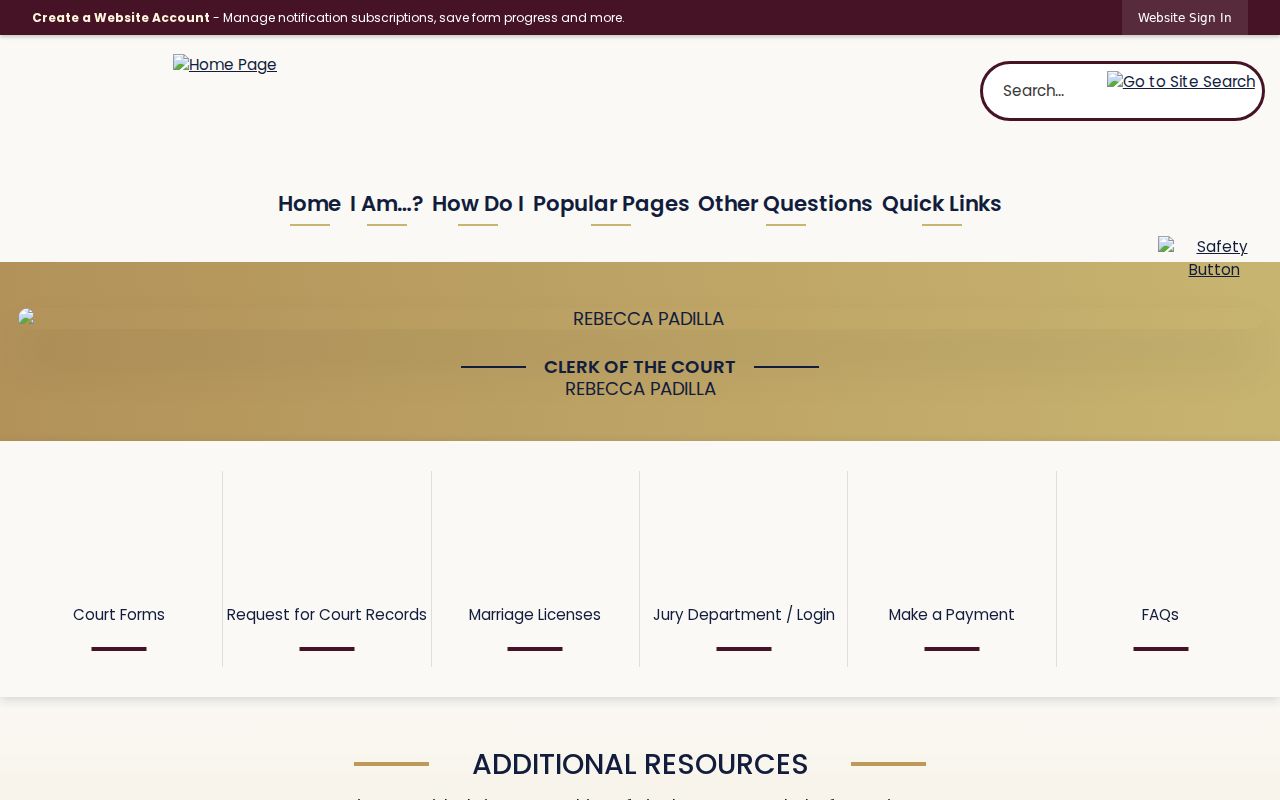
The court source helps explain a legal transfer, while the obituary can add kin and community context. Neither should be stretched beyond its purpose. Supply the court, party, approximate year, and case number when known so staff can identify the existing file rather than conduct an open-ended search.
Limits on Casa Grande Past Residents
A deed proves a recorded transaction. A directory places a listed person at an address in one edition. A census records a household on its reference date. None proves uninterrupted occupancy, and an assessor owner is not automatically an occupant. Conflicts should stay visible until another dated source resolves them.
Protected addresses and sealed records are meant to stop the trail. Do not work around them. Arizona's Address Confidentiality Program and other suppression laws protect eligible people, while court and vital-record rules close specified records. Casa Grande previous-resident research is appropriate for family history, house history, estate work, and personal curiosity.
Lawful use. Use previous-resident evidence with care, and never use it to watch, threaten, harass, or harm a living person.
Note: Preserve each source date and original address form so later readers can distinguish evidence from inference.