
Finding Casa Grande Residents
Begin with the question. A Casa Grande resident search for the owner of a place starts with the Pinal County parcel roll, then moves to the recorded deed. A search for one named person needs two independent identity anchors, such as a middle initial and city, a dated parcel mailing address, or a business filing and court location. A deceased former resident calls for another route: directory or newspaper, then historical death records, probate, and deed transfers. No single result proves who lives at an address now.
The record search works best as a chain. Keep the spelling and address form shown in each source, then note conflicts instead of forcing a match. Hyphens, initials, accents, and two-surname forms matter in Casa Grande. Older rural residents may appear under a farm, post-office box, or land description rather than a modern street.
- Write down the known name, address, date range, and the exact question.
- Search the Assessor by owner or situs address and save the parcel number and legal description.
- Use the Recorder index for the deed, then compare its parties and dates with the parcel record.
- Check court, business, vital, voter, or historical sources only when they fit the question and access rules.
- Ask the named clerk or custodian for the official file when the web trail stops.
Note: A missing portal result can reflect spelling, a coverage cutoff, protected data, or the wrong custodian rather than an absent record.
Casa Grande Records Office Network
Casa Grande is in Pinal County, but Florence is the county seat. That split shapes the residents directory. City Hall keeps municipal actions and local department files. County branches in Casa Grande handle parcel, recorder, and vital-record work, while the deepest county archive may require Florence. State systems supply court, voter, license, and historical vital searches. Call before a trip when an older book or certified copy is needed.
Pinal County Recorder
820 E Cottonwood Lane, Suite A-2
Casa Grande, AZ
520-866-7483
Pinal Recorder services
Pinal Vital Records
1729 N Trekell Road, Suite 120
Casa Grande, AZ
866-960-0633
The City Clerk office profile shows the municipal contact and records role used in a Casa Grande request.
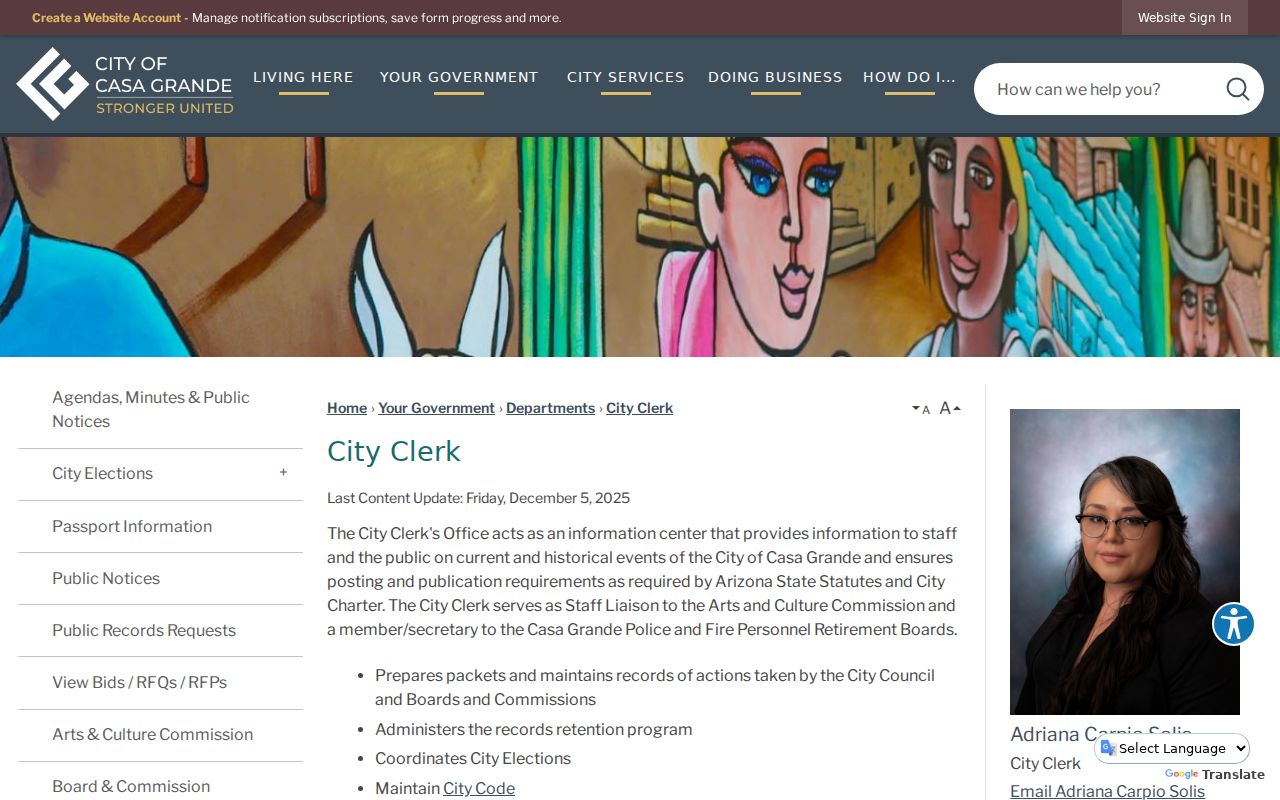
The captured Casa Grande page helps separate city records from the county deeds, parcel rolls, court files, and certificates kept by other custodians.
Casa Grande Parcel Search Fields
The Pinal County Parcel Search is often the fastest official starting point for a Casa Grande address. It can turn a street location or owner name into an assessor parcel number, called an APN, plus the legal description used by the Recorder. The form separates street parts. Avoid pasting a full address into one field. Search a surname first for titled property, and test entity forms when a parcel belongs to a trust or company.
| Search field | Entry type | Best use | Format note |
|---|---|---|---|
| Owners Name | Text | Named owner | Surname first |
| Street Number, Name, Type | Split fields | Physical parcel | Direction is separate |
| Book / Map / Parcel | APN parts | Known parcel key | Suffix has its own choice |
| Subdivision Name | Text | Platted area | Useful when street text fails |
| Section / Township / Range | Dropdowns | Rural land | Public-land description |
| Cabinet / Slide / Lot | Text fields | Known plat | Use the recorded reference |
A result can show the primary owner, a second name, property location, tax-bill mailing address, parcel size, description, class, and zoning or permit references. Save the APN and legal text before changing portals. The full address-focused method belongs in the Casa Grande street directory.
Casa Grande Mailing Address Clues
Pinal property records make an important local distinction. The property address is the situs, or physical parcel location. The tax-bill mailing address is where correspondence goes. A different mailing city or ZIP can lead to the titled owner, but it does not show where that person lives. Likewise, an assessor class may mark a primary or non-primary use without naming each person in the household.
- Parcel
- A mapped unit of land with its own assessor number.
- Roll
- An official list kept for assessment, tax, voter, or other public work.
- Index
- A searchable list that points to a record; it may not include the official file.
- Criss-cross directory
- A printed directory arranged by street or telephone number instead of only by surname.
The Treasurer offers a second owner and mailing search with city, state, ZIP, tax year, and CSV export. It updates nightly. Use that record to date tax activity or find correspondence clues, then return to the Assessor and Recorder for parcel location and title.
Note: Owner, voter, and occupant are different identities, so a Casa Grande directory match needs independent support before linking a person to a home.
Casa Grande Deed Index Trail
Acclaim is the Pinal County recorded-document index for Casa Grande deeds, easements, liens, plats, maps, and notices. Online coverage begins May 23, 1980. Search by party name when the owner and rough date are known. A fee number is the best direct key. Doc Legal connects a parcel description to recorded instruments, while docket and page handle book-style references. Search spelling variants and trace a seller as the buyer in an earlier deed.
The online PDFs carry an unofficial-copy watermark. That is useful for research, but a matter that needs authentication calls for a certified copy. Ordinary copies cost $1 per page, with $3 more for certification per document. Before the web cutoff, ask the Recorder about manual books and microfilm. Requests can also go by email, mail to P.O. Box 848 in Florence, or in person at the Casa Grande or Florence counter.
Casa Grande Court Lookup Layers
Arizona Public Access supplies the free name and case-number index for Casa Grande City Court, Casa Grande Justice Court, and Pinal Superior Court. It reports data from 177 of 184 courts and updates on a weekly cycle. A result may show a party role, case number, type, filing date, judge, docket events, rulings, and disposition. It remains an unofficial lead. Sealed matters and several protected case types do not appear online.
The Arizona Public Access search screen begins with a verification step before its party and case modes.
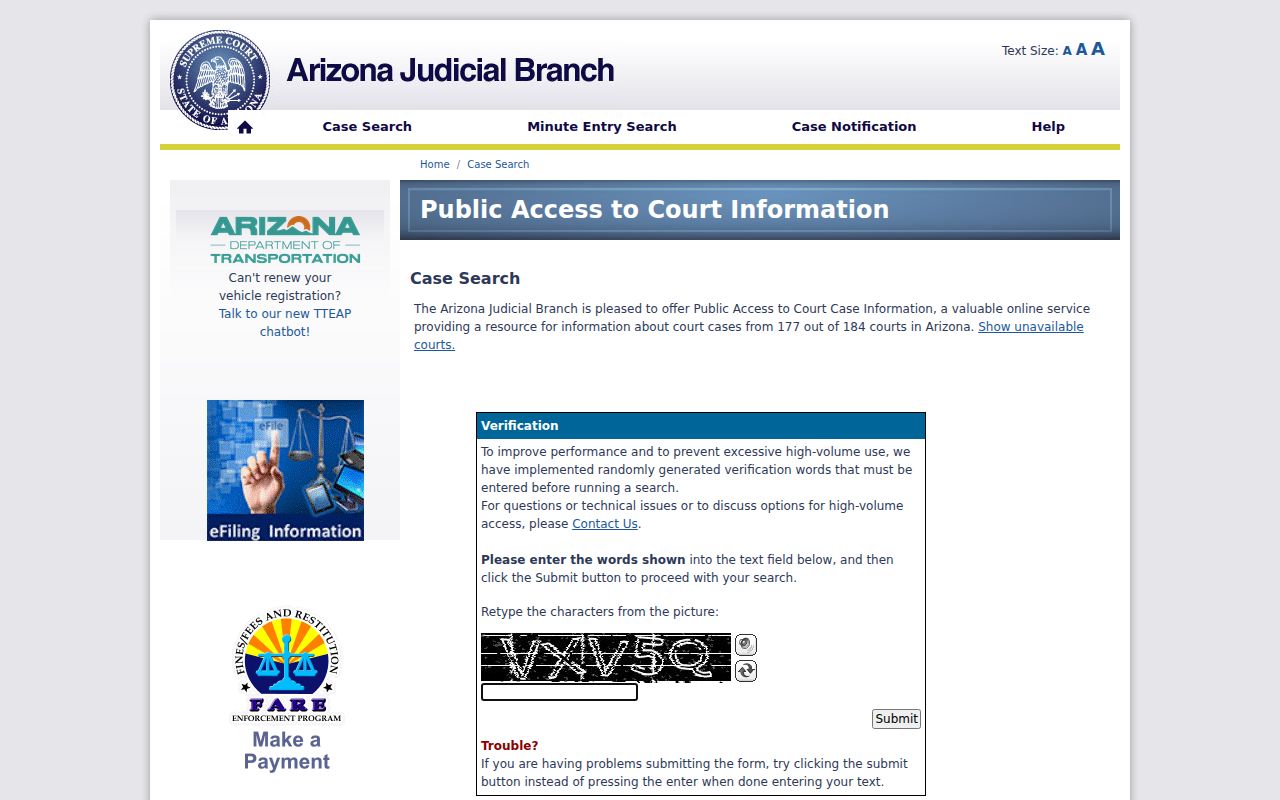
The screen confirms that a directory search must move from the statewide index to the clerk named in the result. City Court keeps its municipal file; the Pinal Superior Court Clerk controls its civil, criminal, family, probate, and marriage-license records. Paid eAccess adds eligible Superior Court civil and criminal images filed from July 1, 2010, but it does not replace the local clerk or cover every case.
| Access route | What it supplies | Main limit |
|---|---|---|
| Public Access | Free case and docket index | Incomplete and unofficial |
| eAccess | Paid eligible document images | Account, coverage, and access limits |
| Court clerk | Official public case file or copy | Sealed and confidential material stays closed |
Note: A free court index can direct a Casa Grande lookup, but the filing clerk remains the source for an official case record.
Casa Grande Voter Record Boundaries
The Arizona Voter Information Portal is an authenticated self-service tool, not an open Casa Grande residents directory. A voter selects Pinal County and enters last name, date of birth, identification method, and identification number. A separate residence-address mode finds polling information. A match can show the voter’s own status, districts, notices, mail-ballot status, and participation history. It never reveals ballot choices.
The Arizona voter dashboard shows the identifiers needed for the official lookup.
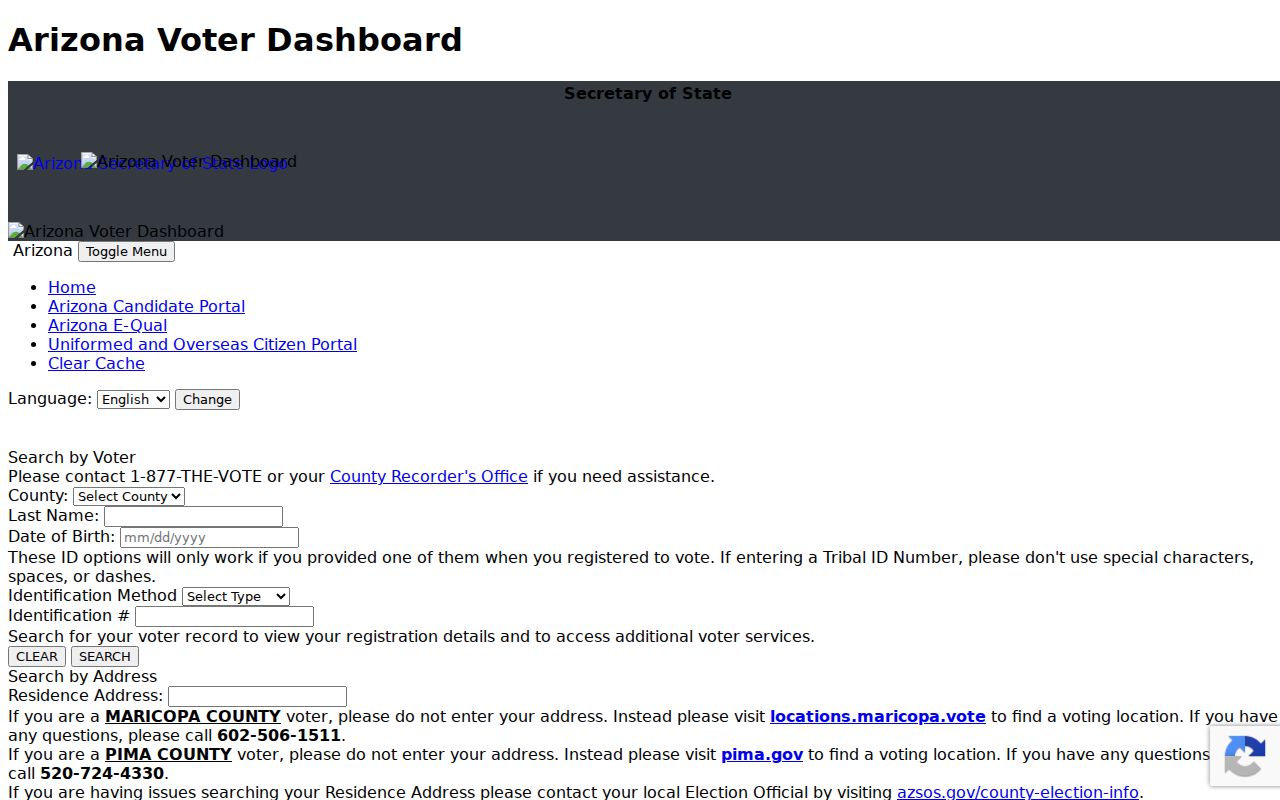
The form’s design explains why it cannot browse all voters on a block. A.R.S. §16-168 governs separate voter-file requests, allowed purposes, fees, and use limits. Protected voters remain shielded under §16-153 and the Address Confidentiality Program. No match can also mean an exact-ID problem, inactive status, nonregistration, or protection. Historical Pinal great registers from 1876 through 1920 offer a different archival route.
Current Casa Grande Residents Directory
Current Casa Grande resident directories are really several official lists with different scopes. The strongest source is the one created for the fact being checked. Property rolls identify legal owners. Recorded documents identify parties to filed instruments. Court indexes show named case roles. Staff directories identify city workers in official posts, while voter self-service confirms only the authenticated voter’s own information.
| Resident source | People or link shown | Keeper | Access route |
|---|---|---|---|
| Parcel and tax rolls | Owner, situs, separate mailing lead | Pinal Assessor and Treasurer | Free online; branch or focused request |
| Recorded documents | Deed, lien, plat, and notice parties | Pinal Recorder | Online from 1980; office, mail, email, microfilm |
| Voter information | Own status and districts | Recorder and state portal | Authenticated self-service; restricted file process |
| Court index | Named party and case role | Arizona courts and filing clerk | Free index; paid images; clerk file |
| City staff list | Public role, email, and phone | Casa Grande | Free searchable directory |
The Casa Grande staff directory demonstrates a narrow public-role directory rather than a private household list.

Its name, department, title, email, and telephone entries help identify an official contact. They should not be merged with private resident data. Commercial people-finding products may combine public and marketing data, but stale addresses and merged names make them weaker than a record obtained from its custodian.
Note: Official Casa Grande rolls are narrow by design, so choose the roll created for the fact that needs to be checked.
Casa Grande Vital Records Paths
Recent Arizona birth and death certificates are closed records. Eligible people may order them from Pinal County or the Arizona Department of Health Services. Casa Grande has a local counter on Trekell Road. Mail requests require the correct application, identification or notarization, relationship proof, payment, and a return envelope. The certified fee shown in the research is $20. Marriage licenses and divorce decrees belong to the Pinal Superior Court Clerk, not the health department.
Historical birth records transfer to public archives after 75 years and death records after 50 years under A.R.S. §36-351(B). The current genealogy search advertises birth images for 1855 through 1945 and death images for 1870 through 1970. Those free images are not certified copies. Adoption files stay sealed for 100 years and require the official court or intermediary route.
For family history, pair a historical certificate image with a directory entry, newspaper item, or deed. A certificate proves the event it records. It does not show a full Casa Grande household across time.
Casa Grande Clerk Request Fallback
The City Clerk is the local fallback for a named municipal record that has no public search. Casa Grande is replacing its request portal, so requests currently go by email. Name the existing record, department, address or person, and an approximate date. The city does not have to create a new compilation. Inspection is free, reasonable copy fees may apply, and the city aims for five working days, though broad or multi-department work may take longer.
The Casa Grande public-record request notice gives the temporary submission method during the portal change.
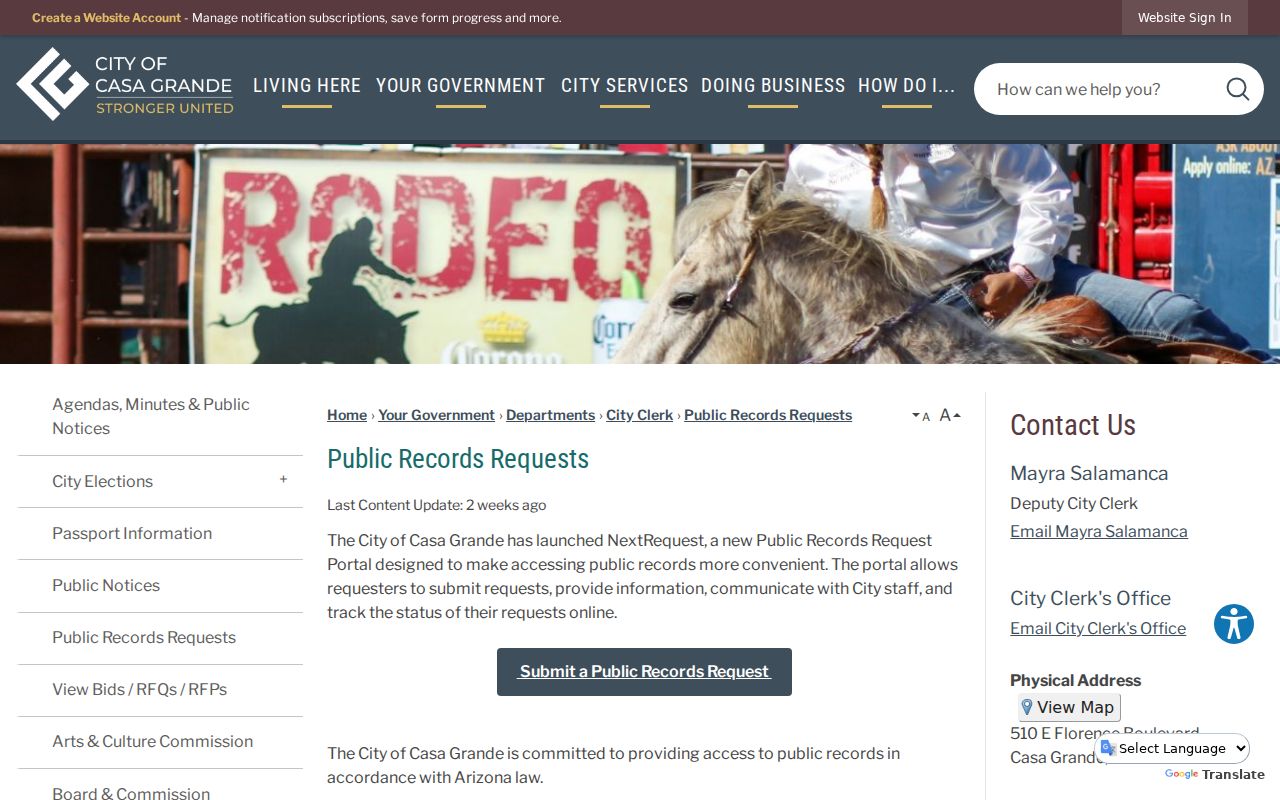
The notice is especially useful when WebPermits reaches a dead end. That portal needs a known permit number and is not an address browser. A focused request should state the exact address, APN, permit type, rough date, and desired permit application, owner authorization, inspection result, or final certificate. Arizona Public Records Law, A.R.S. §§39-121 through 39-128, calls for prompt access but sets no fixed statewide day count.
Note: State that a personal request is noncommercial when applicable, since Arizona law treats a disclosed commercial purpose under a separate rule.
Casa Grande Custody and Safety Records
Custody and safety systems are limited rolls, not a broad resident directory. The Pinal inmate search covers current county jail custody and refreshes hourly. A person disappears after release, and a booking does not prove guilt. State and federal locators cover only their own custody populations. A court docket remains the route for filed charges and disposition.
The Pinal County inmate form accepts a last name or inmate ID.
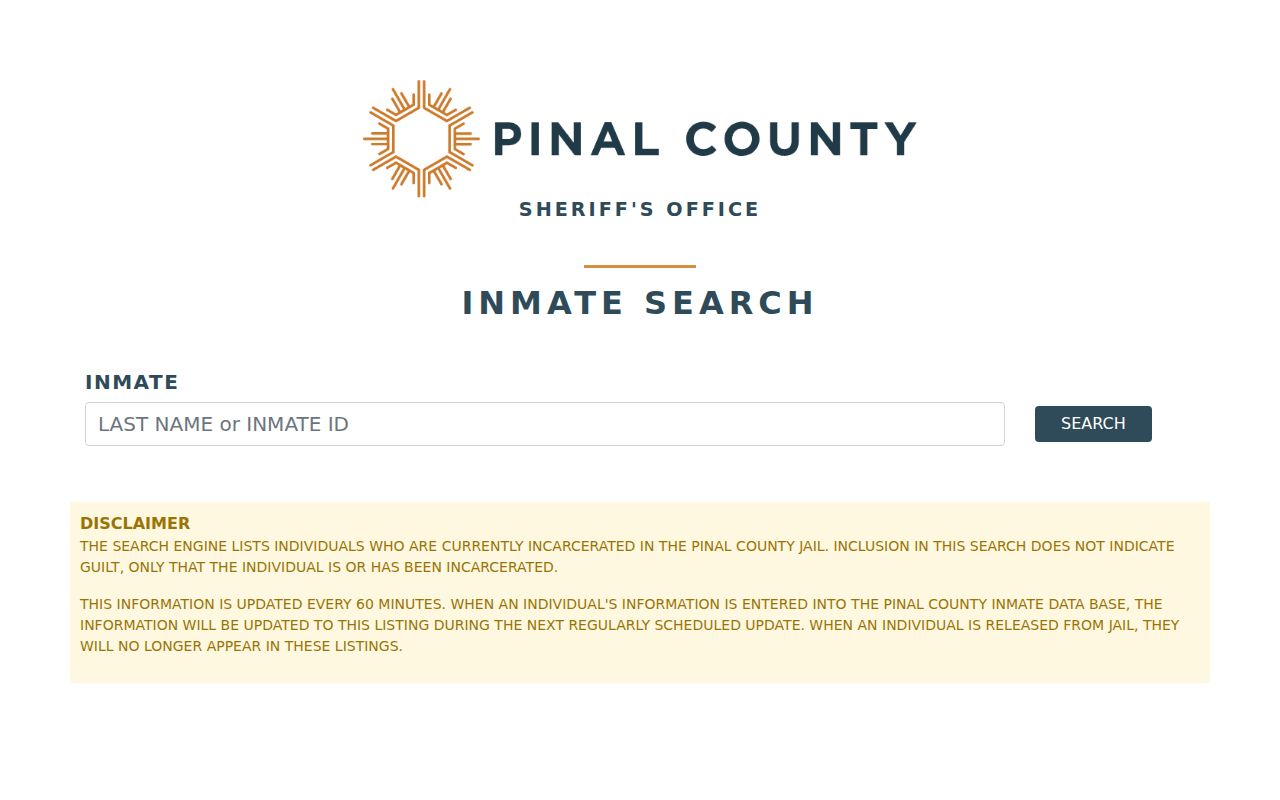
The captured form makes its narrow scope clear. It is a current custody tool, not a past Casa Grande address roll or conviction index.
Casa Grande Registry Use Limits
Arizona DPS publishes a separate community-safety registry with strict anti-harassment terms. The official Arizona registry information explains its purpose and use limits.
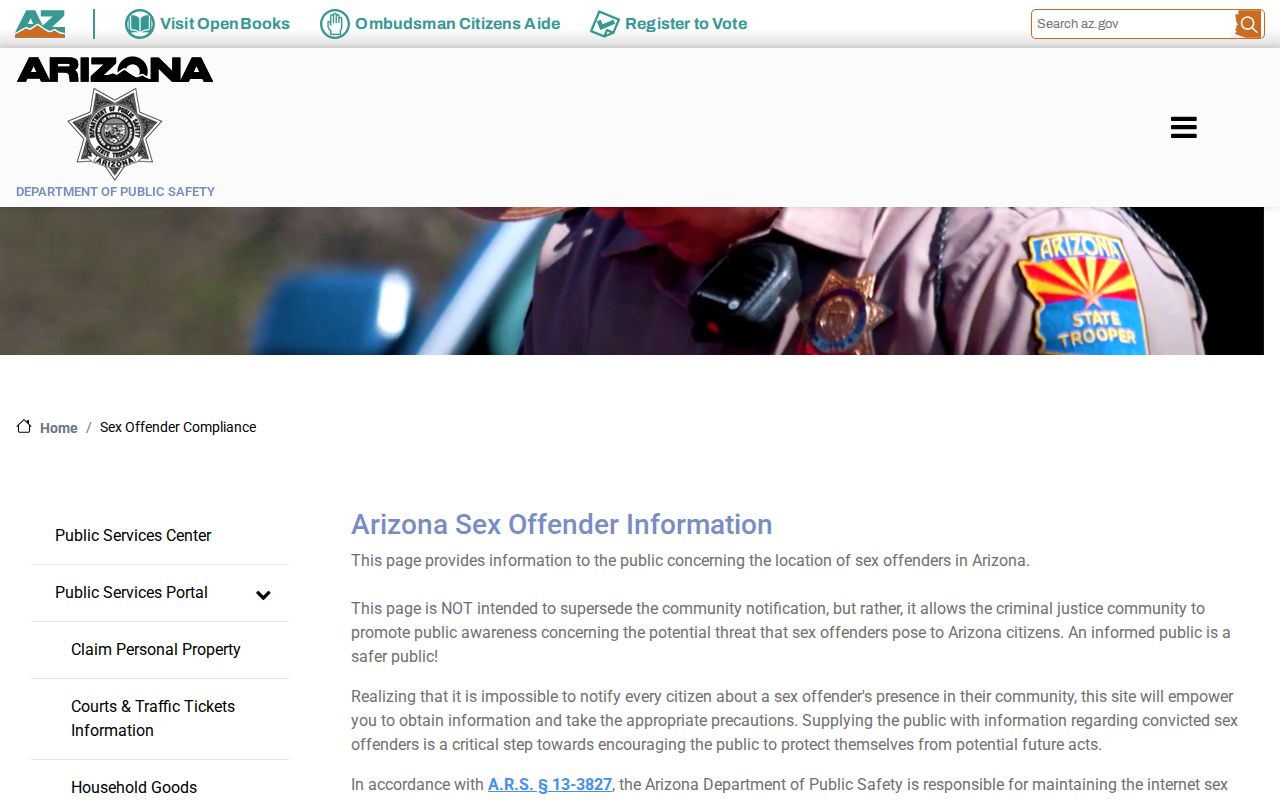
Registry data must be used only for lawful safety aims. Threats, intimidation, or harassment may be prosecuted, and protected information should never be republished as a private roster.
The registry is one narrow safety source. It is not a full Casa Grande directory, and an entry should never be stretched beyond the identity, location, and status fields the official record displays.
Note: Registry terms travel with the data, and Casa Grande users must keep the official anti-harassment limit in view.
Casa Grande Name Match Checks
A name-only hit is weak evidence in a fast-growing city. Casa Grande’s 2025 estimate was 69,753 residents, up 29.9 percent from the 2020 base. The city also has many residents who speak a language other than English at home. Search accents, hyphens, initials, two surnames, maternal and paternal order, and older spelling forms. Then add at least two anchors before treating records as one person.
- Compare a middle initial or full second surname.
- Match the city or ZIP shown at the same date.
- Link an APN, deed fee number, or case number.
- Check a dated business role, credential, or directory occupation.
- Obtain the official file when the index warns that it is incomplete.
Unclaimed property can supply a last-known-address clue after a name search. The Arizona unclaimed-property portal offers a free search and claim route.
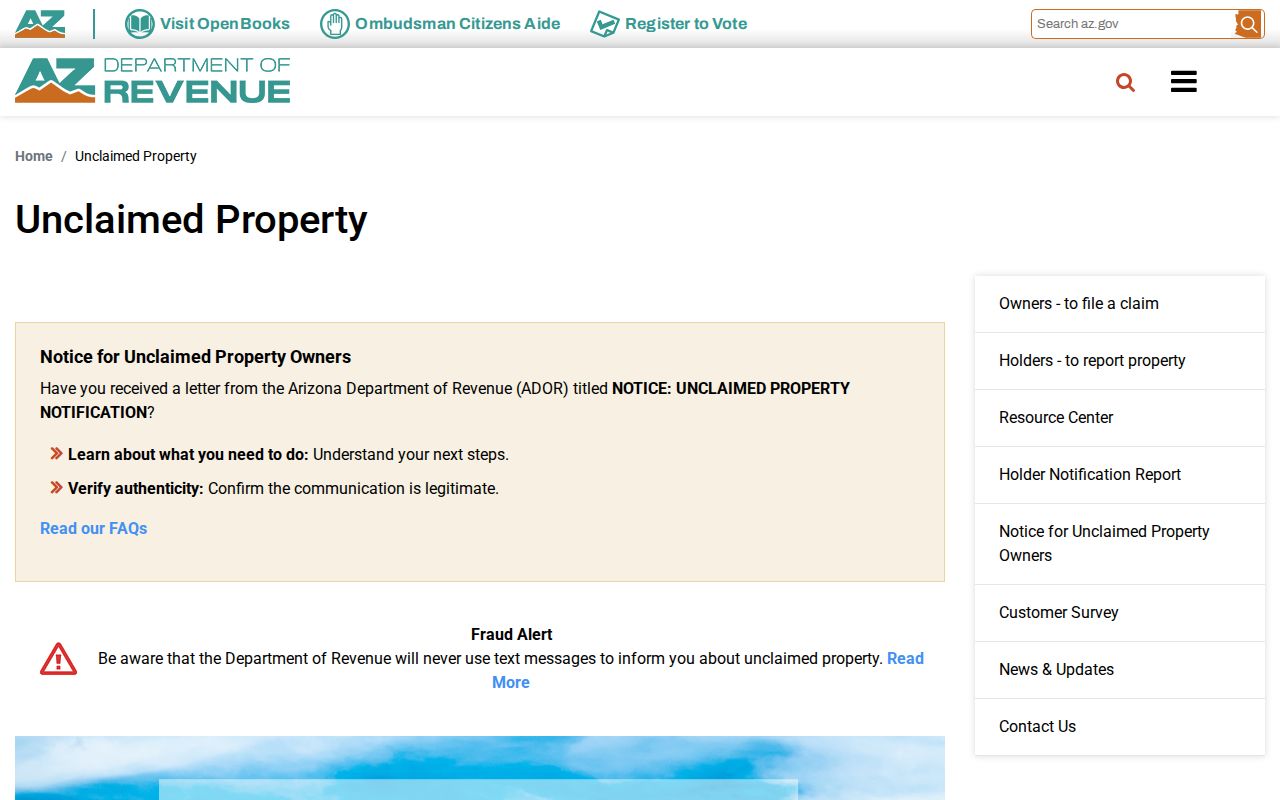
The result is only a lead until the claimant proves a link to the reported address. ADOR accepts items such as old identification, school or court records, tax papers, statements, or postmarked mail. The agency reported returning a record $88 million in fiscal year 2024, which shows the scale of this official source without turning a name match into proof of identity.
Historical Casa Grande Residents Directory
The verified Casa Grande directory shelf is intermittent. It contains 19 dated volumes or volume-years from 1960 through 2000, not an annual run. The State Research Library in Phoenix holds the listed editions, while the Arizona Memory Project provides a free 1960 Mullin-Kille directory for Casa Grande, Coolidge, and Florence. Some Polk volumes also include Eloy and a Pinal County farmers list. Confirm the publisher and format for each year.
A 1960 entry can show a spouse in parentheses, occupation or employer, telephone number, post-office box, and an h before the home address. Street indexes can reverse the search from address to listed person. OCR, or machine-read text, is a lead rather than final proof. Compare it with the page image, then bridge missing years with the local newspaper archive, deeds, the 1950 census, probate, and obituaries.
The Casa Grande Main Library’s Arizona Room offers local research help, but no full shelf list is posted. The Museum of Casa Grande holds family and business papers, oral histories dating from 1964, and more than 30,000 photographs by appointment. The full shelf and entry method are treated on the Casa Grande city directory page.
Casa Grande Records Through Time
The Casa Grande residents directory has changed with the place. Pinal County was formed in 1875, and surviving territorial poll, tax, license, property, and school lists begin in that era. Digitized great registers follow from 1876. Casa Grande began as the railroad stop Terminus in 1879, took its current name in 1880, and developed a townsite beside the tracks in 1892. Early residents may therefore appear in land, farm, railroad, tax, or voting records before a city directory.
Printed resident directories begin in the verified shelf at 1960. The Recorder’s modern web index starts in 1980, while older deeds continue through office books and microfilm. Court access now splits between a free statewide index, paid document service, and the official filing clerk. The city’s current email request process is another reminder that an access channel can change while the underlying public record remains with its custodian.
Read the trail as a timeline, not a universal database. Territorial lists establish an early county setting. Maps and newspapers place a person in the rail and farm town. Printed directories join names to homes and work. Parcel, deed, court, and agency systems then add modern legal and civic facts. Each layer has a date, purpose, and limit, and the best Casa Grande record search keeps all three in view.
Note: Preserve each old address as written because a rural route, former ZIP, or land description may be the key to the next record.