
Survey Casa Grande Directory Collections
The Casa Grande historical shelf has several access points rather than one complete run. The State Research Library holds the verified dated volumes. Arizona Memory provides the most direct digital entry through the 1960 Mullin-Kille book and a broader set of Arizona city and business directories. Casa Grande’s Main Library confirms an Arizona Room and research help, although it does not publish a volume-by-volume shelf list.
| Directory collection | Verified years | Where held | How to use it |
|---|---|---|---|
| Casa Grande printed directories | 1960, 1965, 1967, 1969, 1971, 1973, 1976, 1979, 1981–82, 1988, 1991, 1993, 1997–2000 | State Research Library, Phoenix | Reading room; confirm book or microform before travel |
| Mullin-Kille regional directory | 1960 | Arizona Memory Project | Free PDF, page images, and searchable text |
| Arizona city and business directories | Broad selection, 1881–1989 | Arizona Memory Project and Arizona Historical Society | Free digital collection; verify place and edition |
| Arizona Room local holdings | Exact years not posted | Casa Grande Main Library | In-person reference help; call ahead |
| Regional farmer listings | Volume-specific | Within broader Casa Grande-area titles | Check legal land text and rural names |
Nineteen dated volumes or volume-years survive in the verified 1960–2000 list. That number is a shelf count, not an annual sequence. Confirm the publisher inside each edition: the digitized 1960 book is Mullin-Kille, while a broader catalog title establishes Polk coverage that included regional communities and a Pinal County farmers list.
Place Casa Grande Directories in Time
Casa Grande’s printed-directory era sits within a much longer records story. Pinal County records begin before the city itself, and the form of resident evidence changes from territorial lists to maps, newspapers, books, and searchable legal systems.
| Date | Record milestone |
|---|---|
| 1875 | Pinal County is organized; surviving territorial poll, property, license, tax, and school-census records begin. |
| 1876 | Digitized Pinal great-register coverage begins. |
| 1879–1892 | The railroad stop develops from Terminus to Casa Grande, followed by its laid-out townsite. |
| 1960 | The first verified local directory year appears, published by Mullin-Kille for a regional area. |
| 1965–2000 | Intermittent volumes continue with long and short gaps. |
A missing Casa Grande year should be bridged, not filled by assumption. Publication may have skipped a year, the known library run may be incomplete, or a resident may have been unlisted. The timeline tells researchers when to switch source types.
Read a Casa Grande Directory Entry
The digitized 1960 Casa Grande volume supplies a real entry vocabulary. An alphabetical line can place a spouse in parentheses, list work or an employer, use h for a home address, show a telephone number or post-office box, and abbreviate the community. Government, church, lodge, and business entries appear beside personal listings. Some volumes may also mark a widow, a female head, or tenure status.
| Person | Surname, given name or initials; compare the page image when OCR looks doubtful |
|---|---|
| Spouse | Name in parentheses, creating a second identity anchor |
| Work | Occupation, title, employer, or business listing |
| Home | h followed by the printed address or a post-office box |
| Contact | Telephone number where the edition includes one |
| Tenure mark | Owner or other tenure symbol only when that volume’s key defines it |
- Criss-cross directory
- A section arranged by street and house number, allowing an address-first search.
- Householder index
- A list keyed to heads or listed householders rather than every person at the address.
- Abbreviation key
- The edition’s own legend for symbols, occupations, places, and address marks.
- OCR
- Optical character recognition, the machine-made text used to search a scanned page.
For Casa Grande research, photograph or save the title page, edition date, abbreviation key, entry, and related street index. A volume may have been canvassed before publication, so the edition year is a dated association rather than an exact move date.
Expand the 1960 Casa Grande Search
The 1960 Mullin-Kille edition is not just a book for the municipal boundary. It covers Casa Grande with Coolidge and Florence, while broader catalog evidence also points to Eloy and a Pinal County farmers list in regional directory publishing. That scope matters when a family used a nearby postal name, worked in another town, or lived on rural land beyond a modern numbered street.
Search the digitized 1960 Mullin-Kille directory by Casa Grande surname, initials, spouse, employer, telephone number, and street. Then compare the OCR with the page image. For a farm resident, search the farmers list and retain any section, township, range, or land description. Those fields can connect the listing to later parcel and deed evidence even when no modern address matches.
Note: A regional volume label may include several communities, so record the printed place abbreviation beside every copied name and address.
Use Casa Grande Arizona Room Help
The Casa Grande Main Library at 449 N Drylake has an Arizona Room and local research support. It is open Monday through Friday from 9 to 7 and Saturday from 9 to 5; the reference number is 520-421-8710. Because no detailed online inventory identifies every directory, obituary index, or microfilm title, call before visiting and ask staff to confirm the exact edition or related source.
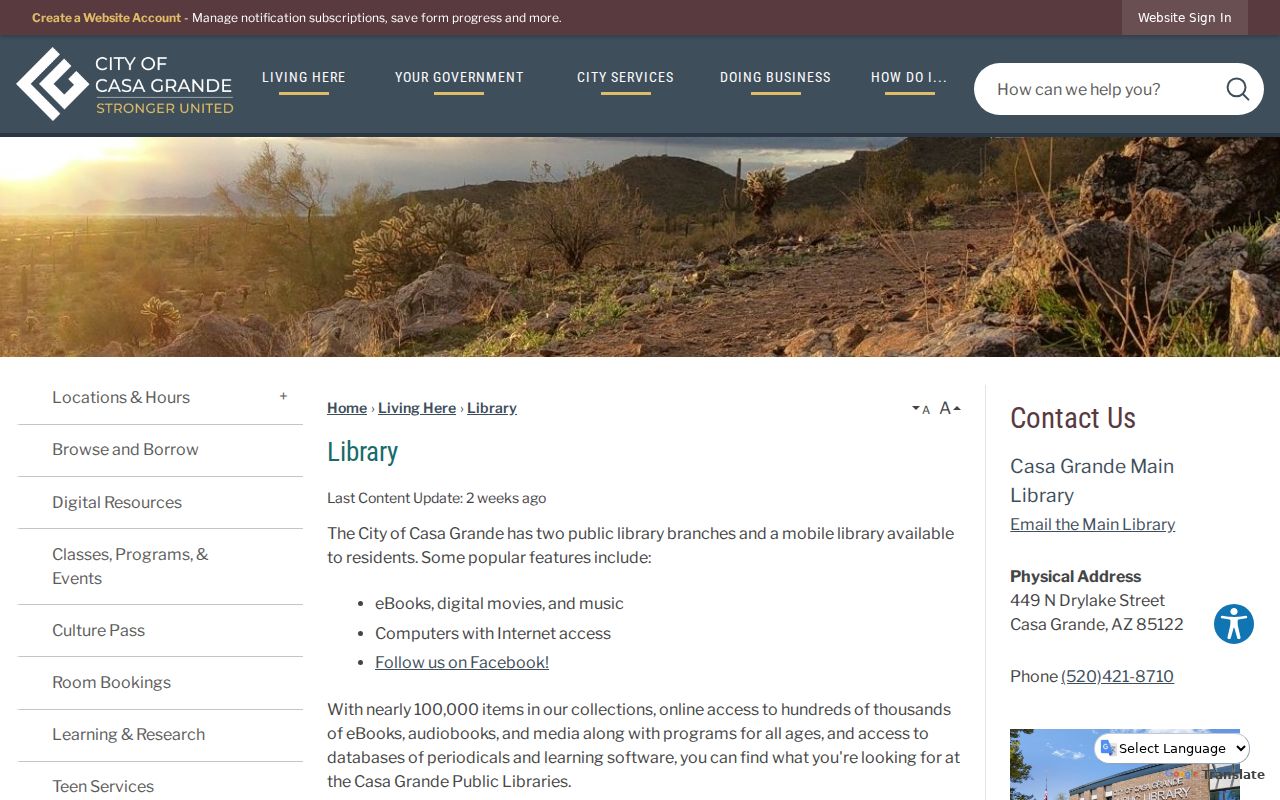
The Casa Grande library page is the best current source for branch contacts and access. It also leads to the local newspaper archive, a crucial fallback when the printed sequence skips years.
Pinal County residents can receive a free library card with photo identification and proof of address. Vista Grande Library at 1556 N Arizola is another reference contact, open weekdays from 8 to 6 and Saturday from 9 to 5. Ask what is available in person rather than assuming the Arizona Room has every State Library volume.
Add Faces to Casa Grande Entries
A directory line gives compressed facts. The Museum of Casa Grande archives can supply the human setting through family and business records, correspondence, maps, drawings, clippings, oral histories, transcripts, and more than 30,000 photographs. Research is by appointment. Those collections extend from the late 1700s to the present, while oral-history work reaches back to 1964.
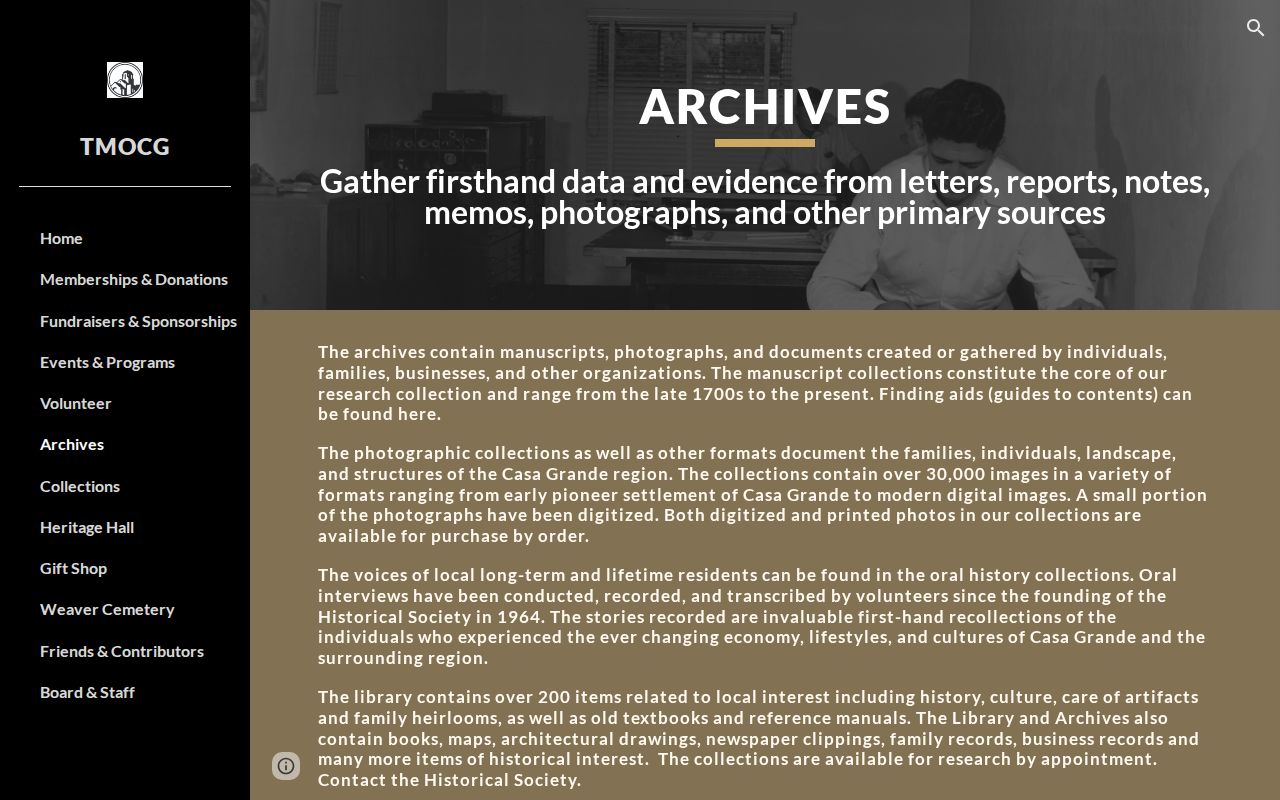
The Casa Grande museum holdings can distinguish people who share a surname and connect a listed occupation to a shop, organization, or event. A strong postwar example is photographer Jim Gorraiz, who arrived in 1949, opened a shop the next year, and photographed local life for the Dispatch. His images can turn a directory name into dated community context.
Send a focused appointment request with the name, spelling variants, likely years, work, address, and known relatives. Archives answer better when the question points to an existing collection rather than asking staff to reconstruct a whole family.
Bridge Casa Grande Directory Gaps
The searchable Casa Grande newspaper archive covers the Bulletin, Dispatch, Times, Cotton and Agriculture, Tri-Valley Dispatch, and Wampum Saver. Search a person or address with title and date filters, then inspect the page. Notices, advertisements, social items, obituaries, and business news can place a name between directory editions.
Other sources answer different gaps. Federal census records are public through 1950 under the 72-year release rule. The Arizona Biographical Database points to citations in books, newspapers, obituaries, periodicals, and vertical files, but it is not a population register. Deeds establish ownership transactions, not occupancy. Sanborn maps show buildings, use, and street form, not residents. Great registers add historical voter and residence clues. For modern address-keyed work, use the Casa Grande street directory workflow instead of extending a printed entry beyond its evidence date.
- Search the known surname, initials, spouse, work, and address in the nearest surviving edition.
- Move to the editions on both sides of the gap and note every change in spelling, phone, work, or location.
- Search dated newspapers within that interval, using the old and new address or ZIP forms.
- Pair the household with the 1950 census where applicable, then compare ownership through deeds.
- Use an obituary or probate file only when the trail points to a death or estate event.
Reach Before Casa Grande Directories
Casa Grande residents who predate the printed shelf require older record forms. The University of Arizona Special Collections holds Pinal County materials from 1875 through 1907, including poll, property, license, delinquent and county tax lists, school censuses, correspondence, and accounts. These are in-person archival records and may use land, occupation, or district terms instead of a city street.

The collection demonstrates the evidence that came before the Casa Grande printed run. Pinal County formed in 1875, digitized great registers begin in 1876, and Casa Grande itself began as a railroad stop in 1879. FamilySearch great registers may add name, age, nativity, occupation, residence, and naturalization details, depending on the year.
Preserve each Casa Grande source’s original place and address language. A farm description, post-office box, railroad reference, or neighboring postal city should sit beside any modern normalized location, not be replaced by it.
Trace Families Through Casa Grande Directories
Printed Casa Grande directories work best as a sequence of dated clues. Begin with a known event and the closest volume. Record all fields, including spouse, initials, work, telephone, and address. Search the street index if the surname fails. Move through adjacent surviving years, then use the sources that fit each gap. Two independent anchors reduce the risk of merging people with the same name.
- Find the first supported entry and save the page image, edition, and abbreviation key.
- Search spelling variants, two-surname orders, initials, spouse, and employer across later volumes.
- Reverse the entry through any street index to confirm the address reading and nearby listings.
- Pair the directory trail with census, newspaper, deed, vital, probate, or archival evidence as the question requires.
- Mark uncertainty when a person vanishes, an OCR result conflicts, or the shelf has no volume for the year.
A Casa Grande directory is not a full household census. It may omit children, unlisted adults, rural residents, or people missed by canvassers. Its strength is the combination of name, date, place, spouse, and work in one compact source. When those details agree with a page image and an independent record, the Casa Grande trail becomes much more reliable.